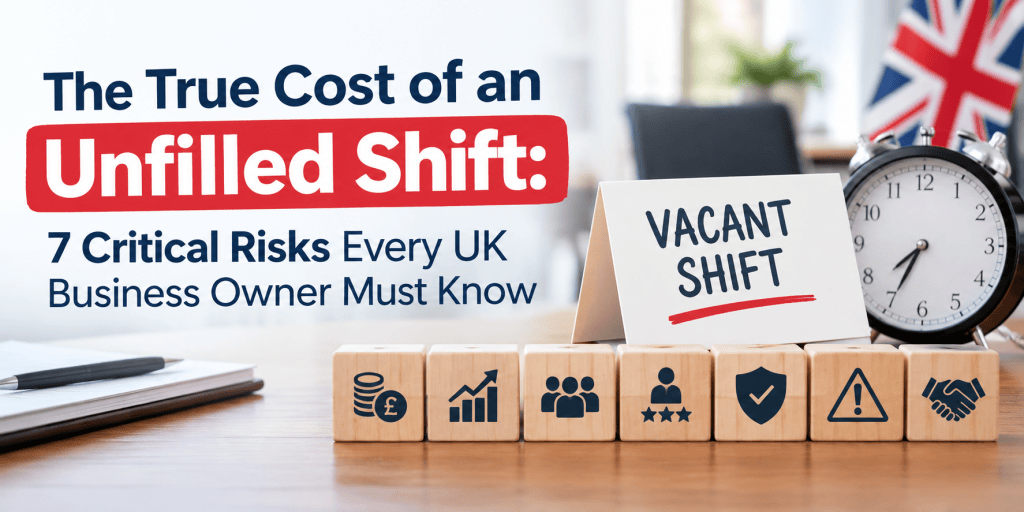
The True Cost of an Unfilled Shift: 5 Critical Business Risks Every UK Owner Must Know
Published by Medco Recruitment Ltd | Workforce Solutions for Growing Businesses
The True Cost of an Unfilled Shift: Discover 5 hidden business risks affecting UK employers and what every business owner needs to know about reliable staffing
You get a call at 6:47am. A member of staff is not coming in. The shift starts in an hour.
You scramble. You message the team group chat, ask a manager to cover, or consider operating short-staffed and hoping for the best. Sound familiar?
For many UK business owners, The True Cost of an Unfilled Shift initially appears to be a minor inconvenience. However, once you calculate the impact on productivity, overtime, staff morale, customer experience and compliance, the financial consequences can be far greater than expected.
This guide explains What Every Business Owner Needs to Know about uncovered shifts and why having a reliable staffing partner can protect your business.
The Visible Cost vs the Hidden Cost
Most business owners focus on the obvious expense: no shift was worked, so wages were saved.
But The True Cost of an Unfilled Shift extends far beyond the wages you do not pay. The impact often spreads across five critical areas, many of which never appear on a payroll report or invoice.
1. Lost Productivity and Revenue
One of the clearest examples of The True Cost of an Unfilled Shift is the immediate loss of productivity.
When a shift goes uncovered, work may be delayed, completed more slowly or distributed among employees who are already under pressure.
In sectors such as hospitality, retail, healthcare, logistics and manufacturing, this can mean:
- Customers waiting longer
- Orders taking longer to process
- Reduced output
- Missed sales opportunities
- Lower service capacity
For example, if one worker generates £150 in productive output per shift, leaving that position vacant could mean £150 in lost value before the day has properly started. Five similar uncovered shifts could represent £750 in lost productivity in one month.
For businesses operating on tight margins, The True Cost of an Unfilled Shift can be the difference between a profitable month and a break-even result.
2. Overtime and Emergency Cover Costs
When a shift is left vacant, the work still needs to be completed. Someone must step in.
This often involves:
- Asking staff to work overtime
- Paying enhanced overtime rates
- Moving managers away from their normal responsibilities
- Splitting workloads across an already stretched team
For example, paying a worker £12 per hour to cover an additional six-hour shift at time-and-a-half would cost £108 in cover wages alone.
However, The True Cost of an Unfilled Shift also includes the opportunity cost of management time. Every hour a manager spends covering the floor is time they are not spending on planning, training, quality control or business development.
3. Staff Burnout and Morale Erosion
Another important part of The True Cost of an Unfilled Shift is the pressure placed on dependable employees.
When staffing gaps happen repeatedly, the burden often falls on the people who consistently attend work. They cover extra hours, absorb additional responsibilities and may gradually become exhausted or disengaged.
Over time, this can contribute to:
- Lower morale
- Increased sickness absence
- Reduced engagement
- Higher employee turnover
- Greater recruitment and training costs
A business may save money by leaving a shift uncovered, but The True Cost of an Unfilled Shift can eventually include losing experienced employees who are difficult and expensive to replace.
4. Customer Experience and Reputation Damage
Customers rarely know why a business is short-staffed. They only experience the consequences.
Longer waiting times, slower service and reduced attention can affect how customers view your organisation.
In industries such as hospitality, healthcare, retail and customer-facing services, The True Cost of an Unfilled Shift may include:
- Negative reviews
- Lost repeat business
- Reduced customer loyalty
- Damage to brand reputation
- Missed recommendations
A single poor customer experience can travel quickly through Google reviews and social media, making reputation protection an important part of workforce planning.
5. Compliance and Safety Risks
In regulated industries, The True Cost of an Unfilled Shift can extend beyond financial losses into compliance and safety concerns.
Healthcare, childcare, security and food production businesses may have minimum staffing requirements or operational safety standards.
Operating below appropriate staffing levels can increase the risk of:
- Failed inspections
- Regulatory action
- Increased liability
- Workplace accidents
- Reduced quality of care or service
A poorly staffed workplace can place additional pressure on employees and increase the likelihood of mistakes. This is why The True Cost of an Unfilled Shift should always be considered alongside legal, operational and safety responsibilities.
Why Do Unfilled Shifts Keep Happening?
Understanding The True Cost of an Unfilled Shift is only the first step. Businesses also need to understand why staffing gaps occur.
Over-Reliance on a Small Worker Pool
If your business depends on only a few available employees, one absence can quickly create an operational crisis.
A wider pool of pre-vetted and reliable workers provides greater flexibility when unexpected vacancies arise.
Slow Booking Processes
If filling a shift requires numerous phone calls, messages and spreadsheet updates, valuable time can be lost.
A recruitment agency can simplify the process by allowing businesses to make one request and begin the search immediately.
No Contingency Staffing Plan
Many organisations only look for staffing support after a crisis has already started.
Planning ahead means businesses can respond faster and reduce the disruption caused by unexpected absences.
High Staff Turnover
Frequent employee departures create ongoing recruitment pressure. A staffing partner can help businesses find candidates who are suitable for both immediate cover and longer-term employment.
The Case for a Reliable Staffing Partner
Working with a recruitment agency should not simply be viewed as an additional expense. It can be a practical way to reduce the wider costs associated with staffing shortages.
When a staffing relationship is established before a crisis occurs:
- Response times can be reduced
- Managers spend less time searching for cover
- Existing employees face less pressure
- Customers receive more consistent service
- Businesses gain access to a wider candidate pool
A reliable agency manages much of the work involved in advertising, screening, compliance checks and maintaining a pool of available candidates.
Ultimately, The True Cost of an Unfilled Shift demonstrates why businesses should focus not only on the immediate wage saving, but also on the wider operational impact.
What Every Business Owner Needs to Know When Choosing a Staffing Partner
When evaluating a recruitment agency, What Every Business Owner Needs to Know includes the following key considerations:
- Speed of response: Can they support same-day or next-day staffing requirements?
- Industry experience: Do they understand your sector and compliance obligations?
- Candidate availability: Do they have access to reliable, pre-screened workers?
- Transparent communication: Will they communicate clearly if a shift cannot be filled?
- Long-term partnership: Do they understand your business beyond individual staffing requests?
A strong staffing partner should feel like an extension of your HR team rather than simply another supplier.
Final Thoughts
The next time a call arrives at 6:47am, consider The True Cost of an Unfilled Shift before deciding that leaving the position vacant is the cheapest option.
The immediate wage saving may appear attractive, but the wider consequences can include lost productivity, overtime expenses, employee burnout, customer dissatisfaction and compliance risks.
For UK businesses, understanding The True Cost of an Unfilled Shift is essential to making smarter workforce decisions and building a more resilient operation.
Get in touch today → | Tell us your staffing needs →
Tags: unfilled shifts, staffing costs, recruitment agency, workforce planning, shift cover, temporary staffing, business operations, HR strategy, employee retention, staff management.